
Hurricane Melissa has left a trail of devastation across the Caribbean, with the death toll climbing to 46 as authorities begin recovery efforts. The powerful storm, which battered several islands with record-breaking winds and heavy rainfall, has caused widespread destruction to homes, infrastructure, and communities.
- Rising Death Toll Across the Caribbean
- Jamaica Reports 19 Deaths and Rising
- Haiti Confirms 26 Casualties
- Dominican Republic Reports One Fatality
- Images Reveal Entire Communities Swept Away
- Massive Power Outages and Blocked Roads
- Storm Weakening but Still Dangerous
- International Aid Begins Pouring In
- Overwhelming Global Response
- U.S. Disaster Team Activated
- United Nations Sends Emergency Food Supplies
- Humanitarian Efforts and Challenges Ahead
- Frequently Asked Questions
- How many people have died due to Hurricane Melissa?
- Which areas were hit the hardest?
- Are communications and electricity restored in Jamaica?
- What is the current status of Hurricane Melissa?
- Is international aid being delivered?
- Why was the U.S. response reportedly delayed?
- Conclusion
Jamaica has been hit particularly hard, with 19 confirmed fatalities, while Haiti reported 26 deaths and the Dominican Republic confirmed one. Officials warn that the numbers could rise as rescue and recovery operations continue. Communities are struggling to cope with the aftermath, as families mourn their losses and emergency teams work tirelessly to retrieve bodies and provide aid. The full scale of Hurricane Melissa’s impact is only now becoming clear.
Read More: Princess Kate’s Favorite Fashion Brand Announces Closure
Rising Death Toll Across the Caribbean
Jamaica Reports 19 Deaths and Rising
The most severe impact has been reported in Jamaica. By Friday morning, the country confirmed 19 deaths, according to Dana Morris Dixon, Minister for Education, Skills, Youth and Information.
Speaking at a press briefing, Dixon emphasized that authorities expect this number to increase as rescue and recovery teams gain access to more affected areas.
Every single life lost is a tragedy. We know these numbers are distressing, but we are doing everything we can to retrieve bodies and support families,” she said.
Haiti Confirms 26 Casualties
Haiti also suffered heavy losses with 26 people confirmed dead. The country, still recovering from previous natural disasters and political instability, faces additional challenges in responding to Hurricane Melissa’s aftermath.
Dominican Republic Reports One Fatality
Officials in the Dominican Republic reported one death, adding to the regional total of 46.
Images Reveal Entire Communities Swept Away
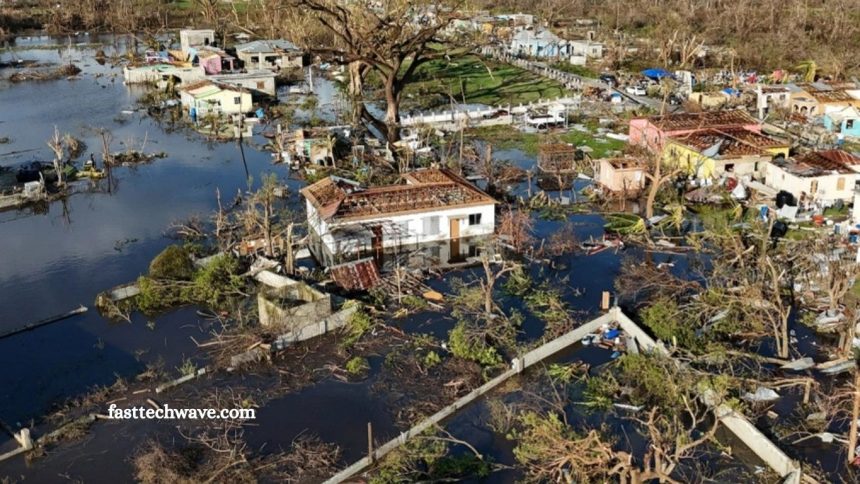
Satellite images and on-the-ground visuals depict the unprecedented force of Hurricane Melissa. Whole communities were washed away by massive floods, while high winds toppled thousands of trees and utility poles.
Mudslides and Flooding Paralyze Towns
Social media videos show Jamaican towns buried under mudslides, with rooftops barely visible. In Salt Marsh, footage captured residents navigating through submerged roads in makeshift canoes as floodwaters swallowed entire neighborhoods.
Eyewitness Accounts
Jimetra Alexander, who endured the storm in Montego Bay, described the experience as terrifying.
Massive Power Outages and Blocked Roads
Hurricane Melissa caused widespread collapse of Jamaica’s infrastructure. As of Thursday afternoon:
- 70% of the island was without electricity
- 82 major roads were fully blocked or destroyed
Infrastructure Minister Robert Morgan stated that countless Jamaican Public Service (JPS) power lines lay strewn across roads, halting repair crews.
Communication Breakdown
Telecommunications failures have made it nearly impossible for many Jamaicans to reach family members. Motorists were seen stopping along highways in search of a signal to call relatives.
Kimberley Dunkley Watkins said she has not heard from her younger brother in Montego Bay since Monday night.
“It’s one of the worst experiences of my life, and I lived through Hurricane Gilbert,” she said.
Officials have acknowledged the frustration. Dixon assured the public that teams are actively working to restore communication services, urging patience as repairs continue.
Storm Weakening but Still Dangerous
As of Friday morning, Hurricane Melissa remained a Category 1 storm with sustained winds of 90 mph. The storm passed Bermuda on Thursday night, where officials recorded a peak gust of 69 mph.
By Saturday, Melissa is expected to lose its tropical characteristics and transition into a powerful post-tropical cyclone, brushing the Canadian Maritimes as it moves north over the Atlantic.
International Aid Begins Pouring In
Overwhelming Global Response
Caribbean nations, especially Jamaica, have started receiving large-scale international support. Telecommunications and Transportation Minister Daryl Vaz said help has been “overwhelming”:
- 20 aid planes expected Friday
- 13 planes arrived Thursday
- 8–10 U.S. helicopters carrying supplies en route
Despite the massive inflow of support, Vaz stressed that distributing aid quickly to cut-off communities remains the greatest challenge.
U.S. Disaster Team Activated
U.S. Secretary of State Marco Rubio activated the State Department’s Disaster Assistance Response Team (DART) to support Jamaica, Cuba, Haiti, and the Bahamas. The team arrived Thursday.
However, officials familiar with the matter told NBC News that the response might have been delayed due to the government shutdown and the dismantling of USAID, which typically coordinates rapid disaster deployments.
United Nations Sends Emergency Food Supplies
The United Nations announced the delivery of 2,000 emergency food boxes from Barbados—enough to feed around 6,000 people for a week.
Brian Bogart, Director of the World Food Program for the Caribbean, expressed deep concern:
Humanitarian Efforts and Challenges Ahead
With isolated communities, washed-out roadways, blocked bridges, and widespread communication failures, relief workers are facing significant logistical barriers. Helicopters and boats are being deployed to reach regions cut off by flooding or landslides.
Families continue to search for missing loved ones while authorities prioritize rescuing survivors, restoring power, and providing medical assistance.
In addition to physical destruction, many residents are struggling emotionally—reliving the trauma of previous storms and facing uncertainty about the future.
Frequently Asked Questions
How many people have died due to Hurricane Melissa?
As of Friday, the confirmed death toll is 46, including 19 in Jamaica, 26 in Haiti, and 1 in the Dominican Republic. Officials expect the number to rise.
Which areas were hit the hardest?
Jamaica suffered catastrophic damage, especially Montego Bay, Salt Marsh, and rural regions affected by mudslides and flooding. Haiti also reported severe impacts.
Are communications and electricity restored in Jamaica?
Not fully. More than 70% of Jamaica remains without power, and telecommunications are unstable, making it difficult for people to contact family members.
What is the current status of Hurricane Melissa?
Melissa remains a Category 1 storm but is expected to weaken into a post-tropical cyclone by Saturday as it moves northward.
Is international aid being delivered?
Yes. Dozens of aid flights and helicopters from the U.S. and other countries have begun landing in Jamaica. The UN has also supplied emergency food boxes.
Why was the U.S. response reportedly delayed?
Sources claim the government shutdown and the dismantling of USAID caused delays in mobilizing the DART team, which traditionally arrives before storms hit.
Conclusion
Hurricane Melissa has left a painful mark on the Caribbean, claiming dozens of lives and destroying entire communities. Jamaica, Haiti, and the Dominican Republic are grappling with widespread devastation, power outages, blocked roads, and missing persons. As rescue teams push forward and international aid continues to arrive, the region enters a critical recovery stage. The next few days will be essential for restoring communication, delivering food and medical supplies, and ensuring that survivors receive the support they desperately need.